
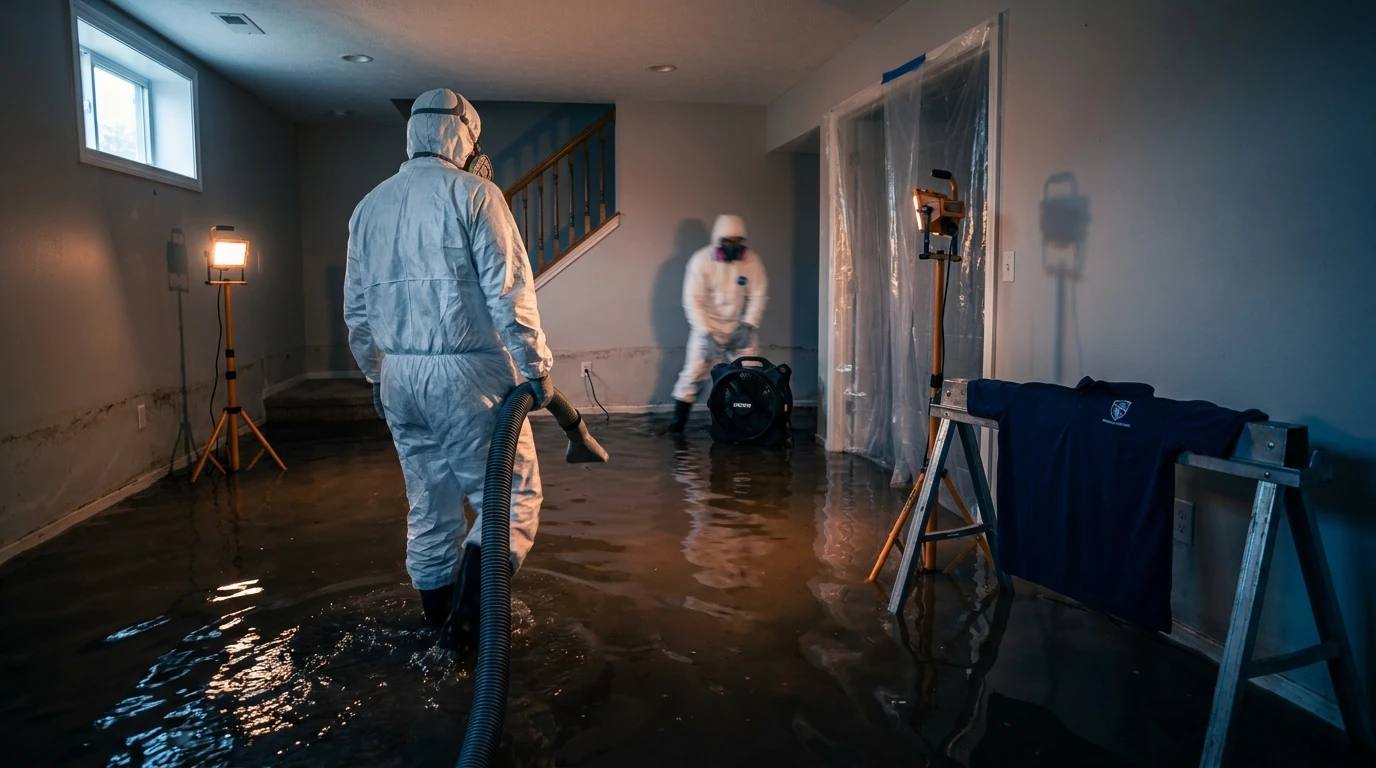
TL;DR: Category 3 water damage, defined by the IICRC S500 standard, involves grossly contaminated water containing pathogens, sewage, or toxic substances. It is the most hazardous water classification. Carpet, padding, drywall, and insulation that contact Category 3 water must be removed and discarded. Cleaning and disinfecting without removing those materials is not sufficient. Professional remediation with proper PPE, containment, and disposal is required every time.
If your basement flooded from a sewer backup, a toilet overflowed and soaked the subfloor, or floodwater from outside poured into your home, you are likely looking at a Category 3 loss. The water looks dirty, smells worse, and carries bacteria and viruses that survive on surfaces long after the water is gone. This is not a situation where a shop vac and some bleach will make things safe again. Here is what Category 3 water actually is, how it is classified, and what a certified crew does to remediate it correctly.
What are the three categories of water damage?
The IICRC S500 standard defines three water categories based on the level of contamination, not the source alone. Category 1 is clean water from a supply line, rain intrusion, or a clean appliance. Category 2, also called gray water, contains some contaminants from sources like washing machine discharge, aquarium leaks, or toilet overflow with urine only. Category 3, also called black water, is grossly contaminated and contains pathogenic agents, sewage, or toxic substances that pose a serious health risk.
Here is a quick reference for all three:
| Category | Common Name | Typical Sources | Health Risk |
|---|---|---|---|
| Category 1 | Clean water | Supply line break, rain, clean appliance | Low |
| Category 2 | Gray water | Washing machine, dishwasher, toilet with urine | Moderate |
| Category 3 | Black water | Sewage backup, rising floodwater, long-standing Cat 2 | High |
One important point most homeowners miss: Category 2 water becomes Category 3 if it sits long enough. The CDC guidance on emergency water cleanup notes that standing water rapidly supports bacterial growth. Within 24 to 48 hours, gray water that was not extracted can cross into black water territory. This is one reason response time matters so much.
Is sewage backup always Category 3 water?
Yes. Any water that has contacted sewage is automatically classified as Category 3, regardless of how much sewage is present or how diluted it appears. A small toilet overflow that wicked into the bathroom subfloor is a Category 3 loss. A sewer line backup that pushed two inches of water across a finished basement is a Category 3 loss. The presence of fecal matter, even in trace amounts, places the water in the highest contamination category under the IICRC S500 standard.
Outdoor floodwater is also typically Category 3. Stormwater picks up agricultural runoff, road chemicals, animal waste, and sewage overflow as it moves across the ground. By the time it enters a home, it carries the same pathogen load as a sewer backup. This is especially relevant in West Texas, where heavy rain events can push water through low-lying areas and into homes quickly.
What materials have to be removed after Category 3 water damage?
After Category 3 water exposure, porous materials that absorbed the contaminated water must be removed and disposed of. They cannot be dried in place and disinfected. The contamination penetrates the material itself, and surface-level disinfection does not reach it.
Materials that are almost always removed:
- Carpet and carpet padding - Padding is a total loss in every Category 3 case. Carpet is also typically removed, though some exceptions exist for very short exposure times on certain fiber types.
- Drywall - Standard drywall is porous. Affected sections are cut out, typically to a height above the visible waterline.
- Insulation - Batt insulation and blown insulation absorb water and contamination and cannot be effectively dried or cleaned.
- Hardwood flooring - Solid hardwood that has absorbed Category 3 water is generally removed. Engineered hardwood is evaluated case by case.
- Cabinets and millwork with particleboard cores - Particleboard swells and holds contamination. Solid wood may be salvageable depending on exposure.
Non-porous materials like concrete, ceramic tile, and some plastics can often be cleaned, disinfected, and retained after proper treatment.
For a broader look at what the remediation process involves from start to finish, see our post on what to do in the first 24 hours after water damage.
What does the Category 3 cleanup process actually look like?
A certified Category 3 remediation follows a defined sequence. Skipping steps or changing the order creates health and liability problems.
1. Containment. Before any removal begins, the affected area is isolated with poly sheeting and negative air pressure to prevent contaminated air and particles from spreading to unaffected parts of the home.
2. PPE and safety. Technicians working in Category 3 environments wear full Tyvek suits, N95 or higher respirators, face shields, and double-gloved nitrile gloves. This is not optional. Sewage-contaminated water carries E. coli, Hepatitis A, Norovirus, and other pathogens that cause serious illness through skin contact or inhalation.
3. Water extraction. Standing water is extracted using truck-mounted or portable extraction equipment. This includes water trapped under flooring and in wall cavities.
4. Removal of contaminated materials. All affected porous materials are cut out, bagged, and disposed of according to local regulations. This is where the scope of a Category 3 loss becomes visible: a finished basement may lose all its drywall, flooring, and insulation in one event.
5. Cleaning and disinfection of structural surfaces. After removal, remaining structural surfaces are cleaned and treated with an EPA-registered disinfectant appropriate for the pathogen load. This step is documented.
6. Drying. The structure is dried to IICRC S500 standard using air movers and LGR dehumidifiers. Moisture readings are taken and logged throughout. Drying is not complete until readings reach the established drying goal for the material type and regional humidity conditions.
7. Clearance testing. Depending on the scope and the insurance carrier’s requirements, post-remediation testing may be performed to confirm the space is safe before reconstruction begins.
Air Care Restoration’s sewage cleanup service and biohazard cleanup service both follow this sequence, documented for insurance purposes at every step.
Can you save carpet after Category 3 water damage?
In almost every case, no. Carpet padding is always a total loss after Category 3 exposure. The padding acts like a sponge and holds contaminated water against the subfloor. Carpet itself, even if it looks intact after drying, has absorbed pathogens that cannot be removed with cleaning or disinfection alone. The IICRC S500 standard is clear on this point: porous materials with Category 3 water contact are removed, not cleaned.
Some restoration contractors will attempt to clean and dry carpet after a Category 3 event to save the homeowner money. This is not compliant with the standard and can create liability problems if the space is later found to have ongoing contamination or mold growth. If an adjuster or contractor is suggesting carpet can be saved after sewage backup, ask them to cite the specific IICRC S500 provision that supports that decision.
How long before Category 2 water becomes Category 3?
Category 2 water can become Category 3 within 24 to 48 hours at typical indoor temperatures. Bacteria multiply rapidly in standing water, and the contamination level rises quickly once the water is no longer moving. Temperature accelerates this: warm indoor air in summer speeds bacterial growth significantly.
This is why the response window matters. Water from a dishwasher leak that is extracted and dried within a few hours is a manageable Category 2 loss. The same water, left over a weekend, may require Category 3 protocols by the time anyone addresses it. If you are not sure how long water has been sitting, treat it as the higher category until testing confirms otherwise.
For more on how water damage costs scale with response time, see our water damage restoration cost guide for Texas homeowners.
What should you do if you have Category 3 water damage?
Get out of the affected area and call a certified restoration company. Do not attempt to extract sewage-contaminated water yourself without proper PPE. Do not run HVAC systems, which can spread contaminated particles through the home. Document everything with photos before anyone starts work, and call your insurance carrier to open a claim.
Category 3 losses are covered under most standard homeowners policies when the source is sudden and accidental, such as a sewer backup rider or a burst pipe. Gradual seepage from outside is often excluded. Your restoration contractor should be able to help you document the source and timeline for the adjuster.
Air Care Restoration responds 24/7 to Category 3 losses across Abilene and the surrounding West Texas region. Their IICRC-certified team handles extraction, containment, material removal, and drying to the S500 standard, with full documentation for insurance claims. To schedule an emergency assessment, call (325) 339-8723 or request service online.
About Air Care Restoration
Air Care Restoration is an IICRC Certified Firm serving Abilene, TX and the surrounding West Texas region, holding Water Damage Restoration Technician (WRT) and Fire and Smoke Restoration Technician (FSRT) certifications, along with EPA Lead-Safe Certification and OSHA training. Licensed by the Texas Department of Licensing and Regulation (license MRC2262), Air Care Restoration provides water damage restoration, sewage cleanup, biohazard cleanup, mold remediation, fire damage restoration, storm damage restoration, and related services. Available 24/7 for emergency response.