
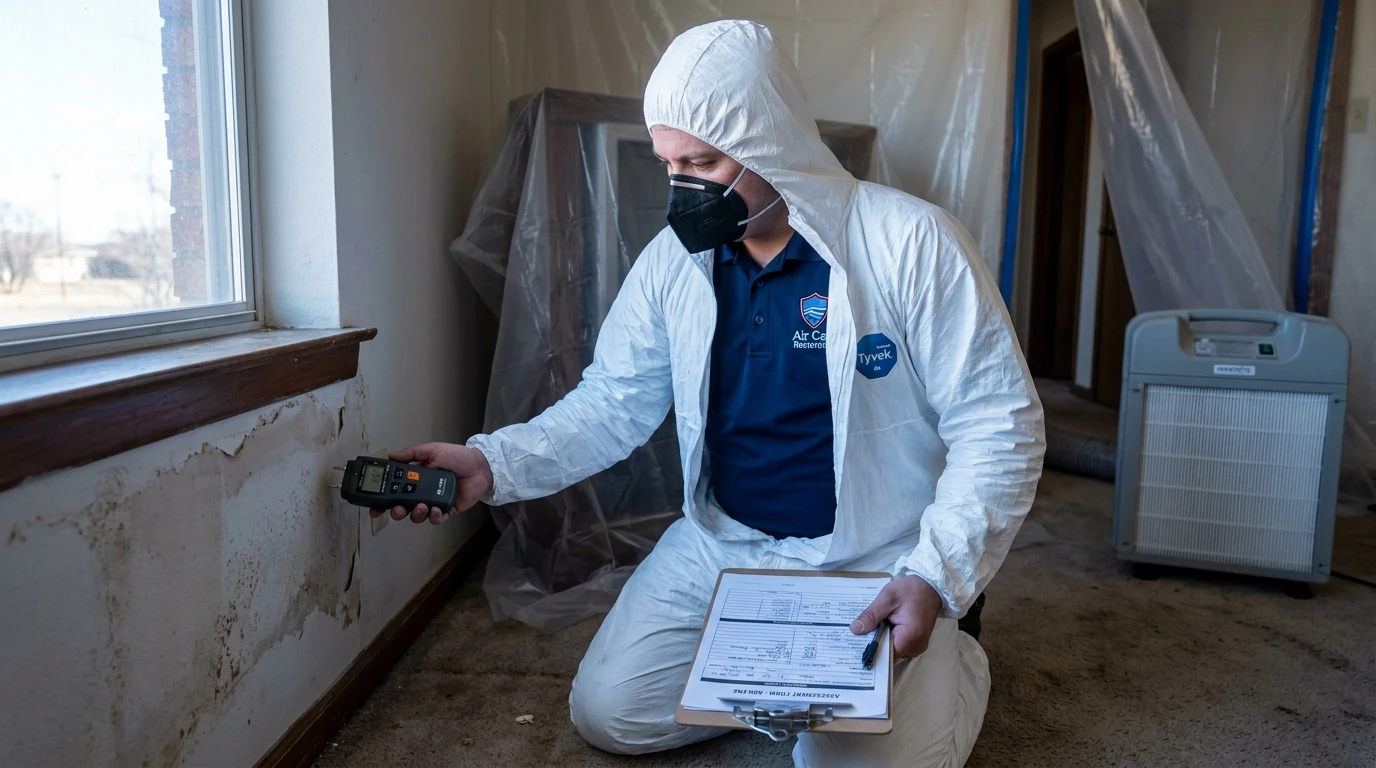
TL;DR: Mold remediation in Abilene typically costs between $500 for a small, surface-level job and $15,000 or more for an extensive job with containment, demolition, and rebuild. Texas law requires a licensed mold assessor to write a remediation protocol and run a clearance test on any job covering 25 contiguous square feet or more, and that adds a separate line item to the total. Square footage, how much porous material has to come out, and whether the mold is in a crawl space, attic, or HVAC system all move the number.
If you just got a mold assessment report back from an inspector and you’re staring at a remediation protocol trying to figure out what the final invoice is going to look like, the range below is the honest answer. Abilene’s mostly dry climate keeps mold pressure lower than coastal Texas, but a slow roof leak, a condensate line that backs up on an attic AC unit, or a foundation crack after a West Texas gully-washer can grow a colony fast in a sealed-up brick ranch home. The price depends on how far it spread before anyone found it.
How Much Does Mold Remediation Cost in Abilene, TX?
Most Abilene homeowners pay somewhere between $500 for a small, contained spot and $15,000 or more for a whole-house job with demolition and reconstruction. The biggest swing factor is square footage, followed by whether drywall, insulation, or subfloor has to be removed and replaced.
| Scope | Typical Cost Range |
|---|---|
| Small spot, under 10 sq ft, no demo (bathroom corner, closet) | $500 - $1,500 |
| Single room, surface growth, 10-50 sq ft | $1,500 - $3,500 |
| Room with drywall/insulation removal, 50-150 sq ft | $3,500 - $7,500 |
| Attic or crawl space mold (framing, insulation, decking) | $2,000 - $6,000 |
| HVAC/air duct mold remediation | $1,500 - $4,500 |
| Whole-house or extensive job with containment and rebuild | $8,000 - $15,000+ |
These are typical industry ranges, not a quote. Every mold job in Abilene gets a written scope after an on-site assessment, because the only way to price it accurately is to know the square footage, the materials involved, and whether a licensed assessor’s protocol requires negative-air containment.
What Drives the Price of a Mold Remediation Job?
Four things move the number more than anything else: the square footage affected, the materials that have to be removed, the containment required, and accessibility. A 20-square-foot spot behind a bathroom vanity costs far less than the same 20 square feet inside a cramped crawl space.
Porous materials like drywall, carpet, insulation, and untreated wood usually can’t be fully cleaned once mold has colonized them, so they get removed and bagged rather than treated in place, following the containment and disposal practices in the ANSI/IICRC S520 Standard for Professional Mold Remediation. Removal and disposal adds labor and material cost that surface cleaning doesn’t. Non-porous surfaces like tile, metal, and sealed concrete can usually be cleaned and treated, which keeps that portion of the job cheaper.
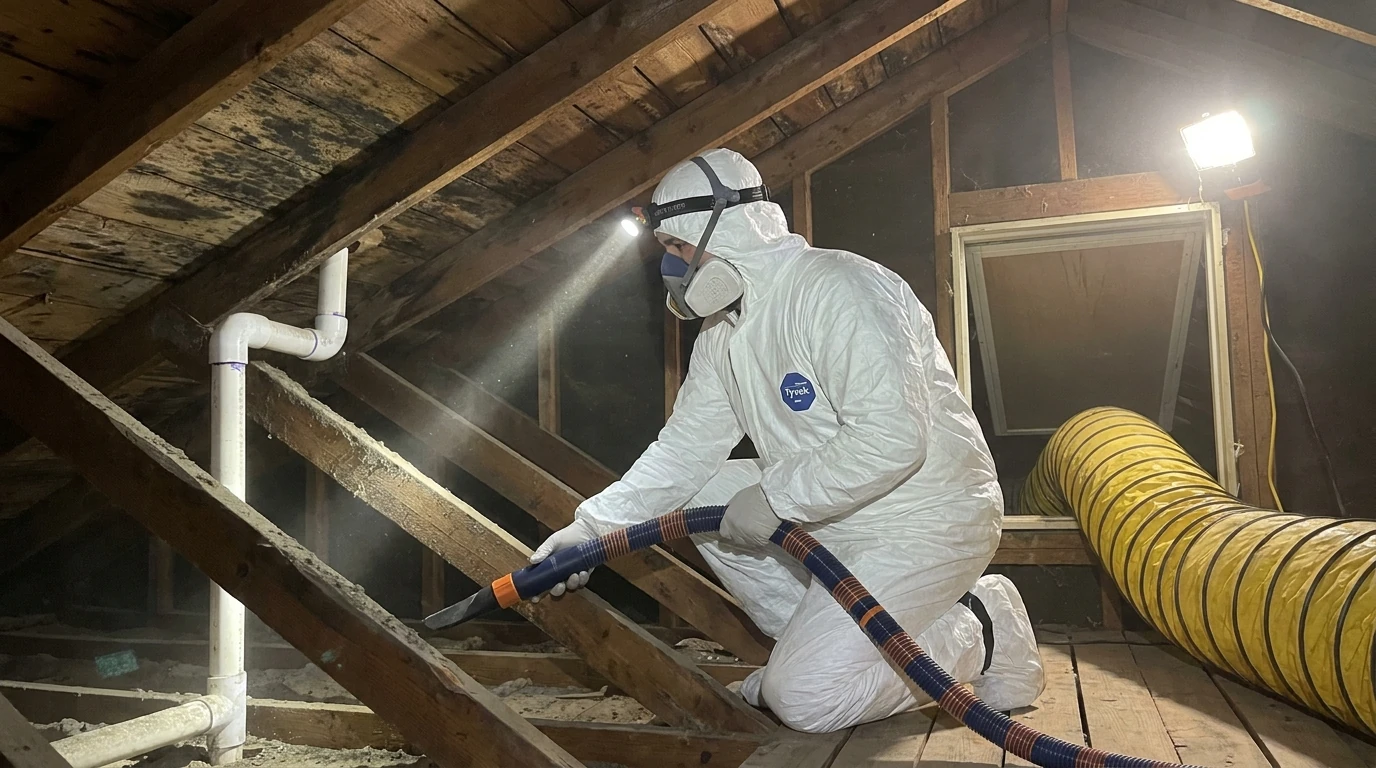
Containment size also matters. A job confined to one small room needs a simple poly barrier and a single air scrubber. A job that’s spread into wall cavities or an attic needs full negative-air containment with HEPA filtration to keep spores from migrating into the rest of the house, which is more equipment and more labor hours.
Why Does Mold Assessment and Clearance Testing Cost Extra in Texas?
Texas requires a separate, independently licensed mold assessor for any remediation project covering 25 contiguous square feet or more, and that assessor’s protocol and post-job clearance test are billed apart from the remediation work itself. Expect to budget roughly $300 to $800 for the initial assessment and a similar range for the clearance test once remediation is complete, depending on the number of samples taken.
The Texas Department of Licensing and Regulation’s Mold Assessment and Remediation program sets this rule specifically to prevent the same company from inspecting its own work and declaring it clean. The assessor writes the remediation protocol before work starts, the remediation crew follows it, and the assessor returns afterward to collect clearance samples confirming mold spore counts are back to a normal range. If your job is under 25 square feet, Texas doesn’t require this step, but a written moisture source finding is still worth getting before any remediation begins, because remediation that doesn’t fix the water source just grows mold back. Our guide on how to test for mold walks through the difference between a DIY kit and a licensed assessor’s inspection.
How Much Does HVAC and Air Duct Mold Remediation Cost?
HVAC and air duct mold remediation in Abilene typically runs $1,500 to $4,500, depending on the length of ductwork, the number of registers, and whether mold has reached the coil or air handler itself. A system with surface growth on a few ceiling registers costs less than one where condensation has driven mold into the insulation lining the ducts.
This matters in Abilene because attic-mounted AC units are common, and a clogged or disconnected condensate line can drip onto insulation and framing for weeks before anyone notices a musty smell coming through the vents. Cleaning alone (a rotary brush and HEPA vacuum pass) addresses surface growth; if mold has colonized the duct insulation itself, sections of ductwork usually need replacement rather than cleaning, per EPA guidance on mold cleanup. A standalone duct cleaning without active mold growth is a different, lower-cost service.
Does Homeowners Insurance Cover Mold Remediation in Texas?
Texas homeowners policies typically cover mold remediation only when the mold resulted from a sudden, covered peril, like a burst pipe, and even then most policies cap mold-specific payouts at a few thousand dollars regardless of the underlying damage. Gradual issues like a slow roof leak, long-term humidity, or deferred maintenance are commonly excluded outright.
The Texas Department of Insurance’s guidance on water damage and mold coverage is worth reading before you file, because coverage details vary significantly by carrier and endorsement. Check your specific policy for a mold sublimit or exclusion before assuming the cost will be reimbursed. If the mold followed a recent water loss, our Texas water damage restoration cost guide covers how that claim process typically works, since the two often get filed together.
What Happens During a Mold Remediation Job?
- Assessment and protocol. A licensed assessor inspects, documents the moisture source, and writes the remediation scope.
- Containment setup. Poly sheeting and negative-air machines seal off the work area so spores don’t spread to clean parts of the house.
- Removal. Affected porous materials are removed, bagged, and disposed of; non-porous surfaces are cleaned and treated.
- Drying and HEPA cleaning. The space is dried to normal moisture levels and HEPA-vacuumed to remove settled spores.
- Clearance testing. The assessor returns, takes samples, and confirms the space passes clearance before containment comes down.
- Rebuild. Drywall, insulation, or flooring that was removed gets replaced.
If you’re ready to get an actual number instead of a range, Air Care Restoration can schedule an on-site assessment in Abilene and surrounding areas and provide a written scope before any work begins. Restoration with CARE means the quote reflects your specific square footage and materials, not a generic estimate.
About Air Care Restoration
Air Care Restoration holds a Texas Mold Remediation Contractor License (MRC2262) through the Texas Department of Licensing and Regulation and operates as an IICRC Certified Firm serving Abilene, TX and the surrounding Big Country region. The crew handles mold remediation, air duct and HVAC cleaning, and water, fire, and storm restoration work across the area, with 24/7 availability for active water or storm emergencies.
Need help now? Call Air Care Restoration at (325) 339-8723.