
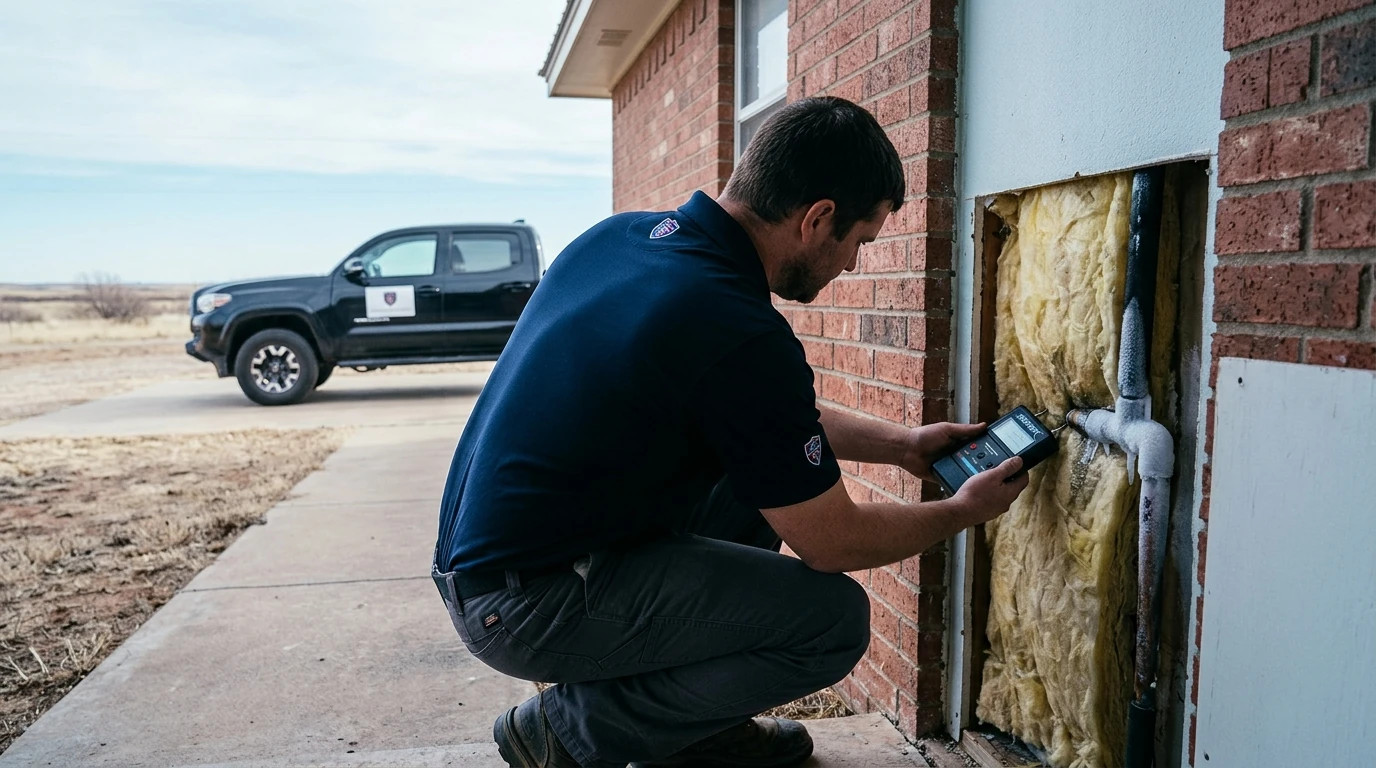
If a pipe has frozen solid at your Abilene home and nothing’s flowing yet, your first call is a licensed plumber who can thaw it safely without cracking the fitting further. But once that frozen line splits and water starts spreading across the floor, the call changes: that’s when you need Call Air Care Restoration at (325) 339-8723, a 24/7 IICRC Certified Firm that starts water extraction before the damage reaches drywall, insulation, and flooring.
Frozen But Not Burst: Is a Plumber Enough?
Yes, a frozen pipe that hasn’t split yet is a plumbing call, not a restoration call. If the faucet just won’t run and you don’t see water on the floor, ceiling, or wall, the line is still intact and needs controlled thawing, not demolition.
A plumber can open the wall or cabinet access, apply heat gradually (a hair dryer or heat tape, never an open flame), and relieve pressure before ice fully blocks the line. Thawing takes patience: forcing heat too fast on a weakened pipe is often what causes the split in the first place.
Once the plumber confirms the line is still sound and repairs or reroutes it, there’s nothing left for a restoration company to do, because there’s no water damage yet.
When the Pipe Thaws and Leaks: Who Do You Call for Water Damage?
Call a water damage restoration company the moment water is actively escaping into the structure, whether that’s a visible split or a drip you can hear but can’t see.
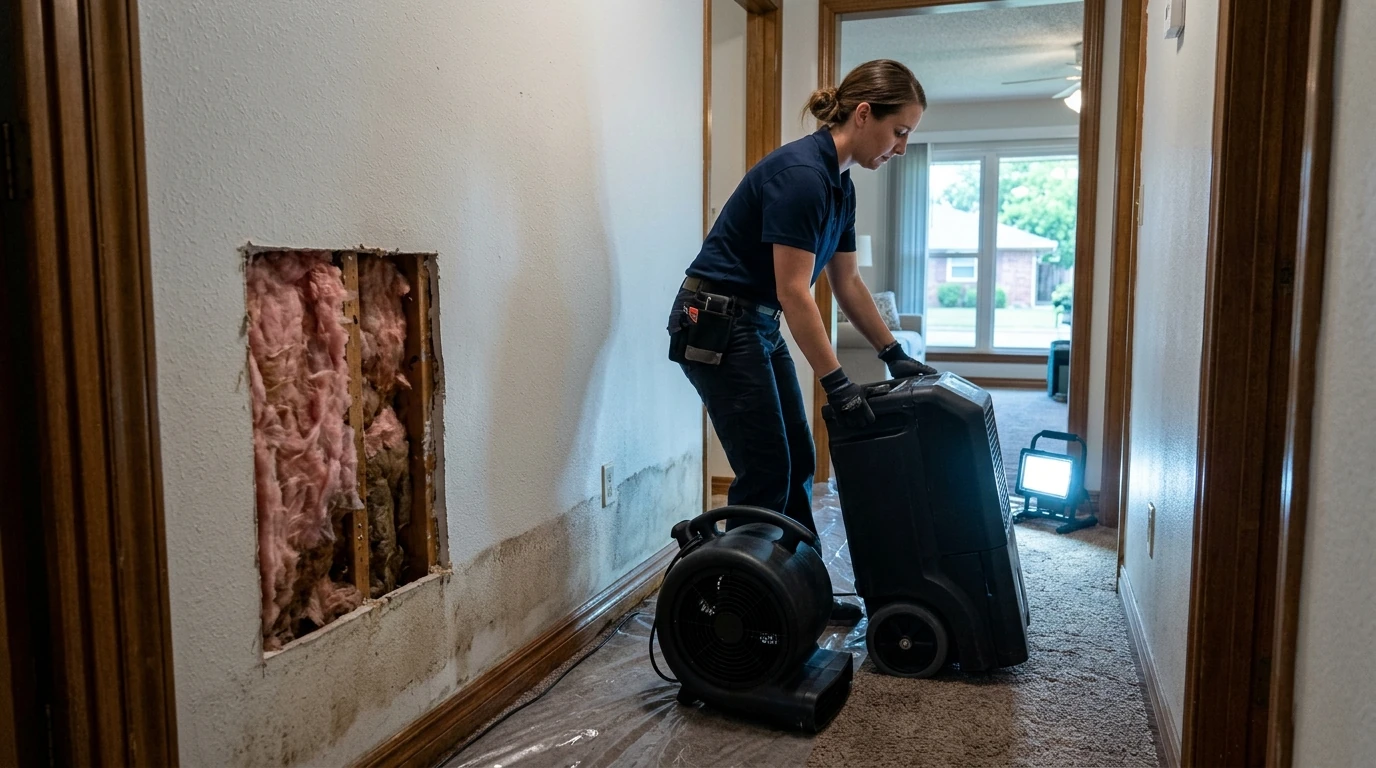
Standing water and wet insulation need extraction equipment and commercial dehumidifiers within hours, not days, to keep drywall, subfloor, and framing from absorbing more moisture than they can shed. Mold can start growing within 24 to 48 hours on wet building materials, according to the EPA. The longer wet materials sit, the more of them typically have to be cut out instead of dried in place.
If this is your first time dealing with an active break rather than a pre-burst freeze, the companion guide on who to call first for a burst pipe in Abilene covers the first 60 minutes in more detail.
How Can You Tell If a Frozen Pipe Burst Inside a Wall or Attic?
A hidden break usually shows up as a stain, a sag, or a smell before you ever see standing water. Watch for a growing discolored patch on drywall or a ceiling, a soft or bulging spot you can press with a finger, a musty smell, or a water meter that keeps ticking after every faucet in the house is off.
Attic breaks often show first as a wet patch on the ceiling below, sometimes with insulation sagging through a light fixture or vent opening. A pipe inside an exterior wall will often feel cold and damp to the touch, or the baseboard below it will start separating from the wall.
If you spot any of these signs, shut off the water at the main and call for an assessment. A moisture meter finds wet framing and insulation long before it’s visible to the eye.
What To Do While You Wait
Shut off the water at the main shutoff valve, not just the fixture, if you can locate it. This stops new water from entering even if the break is hidden behind a wall.
Turn off electricity to any affected room at the breaker if water is near outlets or fixtures, and never use a heat gun, torch, or open flame to thaw a pipe. Move furniture and contents away from the wet area if it’s safe to do so, and photograph everything before anything gets moved or cleaned up. The burst pipe emergency checklist walks through the full sequence step by step.
Do Frozen Pipes Always Burst?
No, most frozen pipes do not burst. Ice expanding inside a pipe raises pressure downstream of the blockage, and many pipes, especially newer PEX lines, flex enough to handle that pressure without splitting.
Older copper and galvanized steel pipe, pipe in an uninsulated exterior wall or attic, and pipe with a closed valve on both ends (no pressure relief) are the ones most likely to fail. Abilene’s older brick homes with pipe runs in exterior walls or unconditioned attics are the higher-risk cases during a hard freeze.
Does Homeowners Insurance Cover Frozen Pipe Damage in Texas?
Most Texas homeowners policies cover sudden water damage from a pipe that bursts, but they typically exclude damage from a slow leak, long-term neglect, or a pipe that froze because the home was left unheated without reasonable precautions. The Texas Department of Insurance notes that insurers look closely at whether the homeowner took reasonable steps to prevent freezing, like keeping heat on and insulating exposed pipe.
Document the damage with photos before cleanup starts, keep receipts for any emergency mitigation, and ask your adjuster in writing what’s covered before major repairs begin. A restoration record that logs moisture readings and removed materials makes that claim easier to support later.
A hard freeze severe enough to burst Big Country pipe usually shows up on the National Weather Service forecast days in advance, which is the window to insulate exposed pipe, drip faucets, and open cabinet doors on exterior-wall sinks before the temperature drops.
If you’re past that window and water is already moving through your home, request a water damage assessment and get the drying started before the freeze turns into a bigger repair.