
If you can see mold spreading across a bathroom ceiling, or you just pulled up water-stained carpet and found a sour smell underneath, you need one phone call to start, not twenty. For mold problems in Abilene, TX, call Air Care Restoration at (325) 339-8723. The company holds a Texas Mold Remediation Contractor License (MRC2262) through the Texas Department of Licensing and Regulation, its crews are IICRC-certified, and the line is answered 24/7, so you can report what you’re seeing the moment you notice it rather than waiting for business hours. Mold remediation in Texas is a regulated trade with a specific process, and knowing the rules ahead of time keeps you from paying for more (or less) than the job actually needs.
But not every mold problem starts with a remediation crew walking in the door. Texas splits this work into two licensed roles, and depending on how big the affected area is, you may need to call a different kind of professional first.
When do you need a mold assessor first, and when can a remediator start right away?
You need an independent mold assessor first when the suspected mold covers 25 contiguous square feet or more; anything smaller is treated as a job a licensed remediation contractor can scope and clean without bringing in a separate company.
TDLR licenses two distinct roles: mold assessors, who inspect, test, and write the remediation protocol the cleanup crew must follow, and mold remediation contractors, who physically remove the mold and restore the area. For any job at or above that 25-square-foot line, state rules require the assessor and the remediation contractor to be two different businesses, so one company isn’t both diagnosing the problem and billing to fix it.
In practice, this means: a single patch under a sink or around a window AC unit, roughly the size of a card table or smaller, is usually a remediation-company visit, start to finish. Mold running along a baseboard, up a stairwell, under hardwood flooring, or anywhere you can’t see the full extent behind drywall is a sign you may be over that threshold, and an assessor’s written protocol protects you if the scope grows mid-job. If you’re not sure which camp you’re in, how to test for mold and the early signs of hidden mold are both good places to check before you call anyone.
Mold showed up after a water leak. Who do you call first?
Call a water damage restoration company the same day the leak happens, before mold has a chance to start; mold typically begins growing on wet drywall and framing within 24 to 48 hours, so getting water out and surfaces dry fast is itself mold prevention.
Abilene’s mix of slab-foundation and pier-and-beam homes both create their own leak patterns: slab homes tend to show slow moisture through flooring and baseboards, while pier-and-beam crawlspaces can hide a leak for weeks before anyone smells it upstairs. Evaporative coolers add another common source, since condensation lines and pads that aren’t drained properly can wick water into a ceiling or wall cavity all summer. If the leak is recent and the area is still just wet, a water damage restoration visit focused on extraction and drying can often head off mold entirely. If water already sat for several days and you can see or smell active growth, you’re past the drying stage and into a remediation job.
What happens when you call for mold remediation in Abilene?
The first call is a short conversation, where you’re seeing it, roughly how big the area is, and how long it’s been wet, followed by an on-site inspection that determines whether the job needs an assessor’s protocol under the 25-square-foot rule.
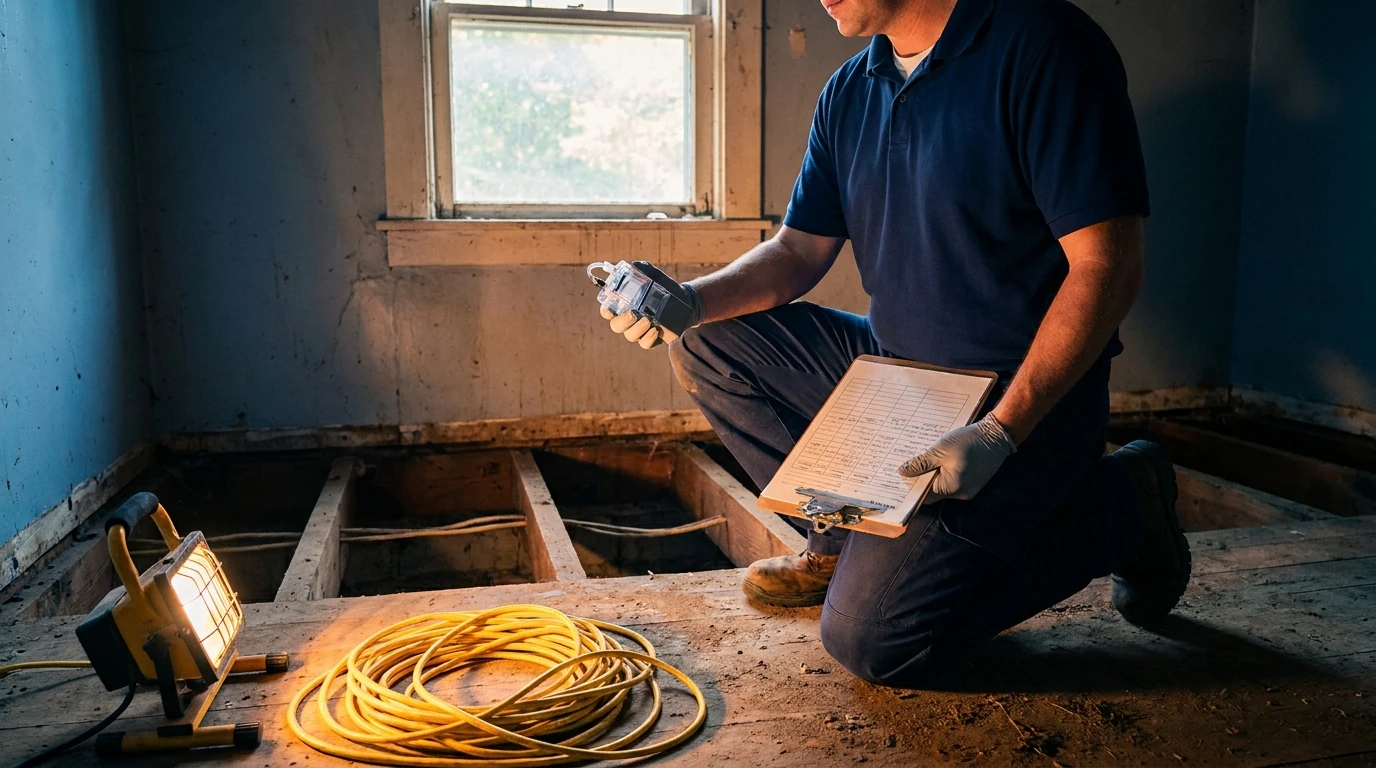
Before the visit, it helps to have a few things ready: photos of the affected area, an approximate size, and the date water first got in, if you know it. On arrival, the technician maps moisture with a meter, checks how far the growth extends behind visible surfaces, and walks you through the plan before touching anything. If the job crosses the state threshold, work pauses until a licensed assessor writes the protocol.
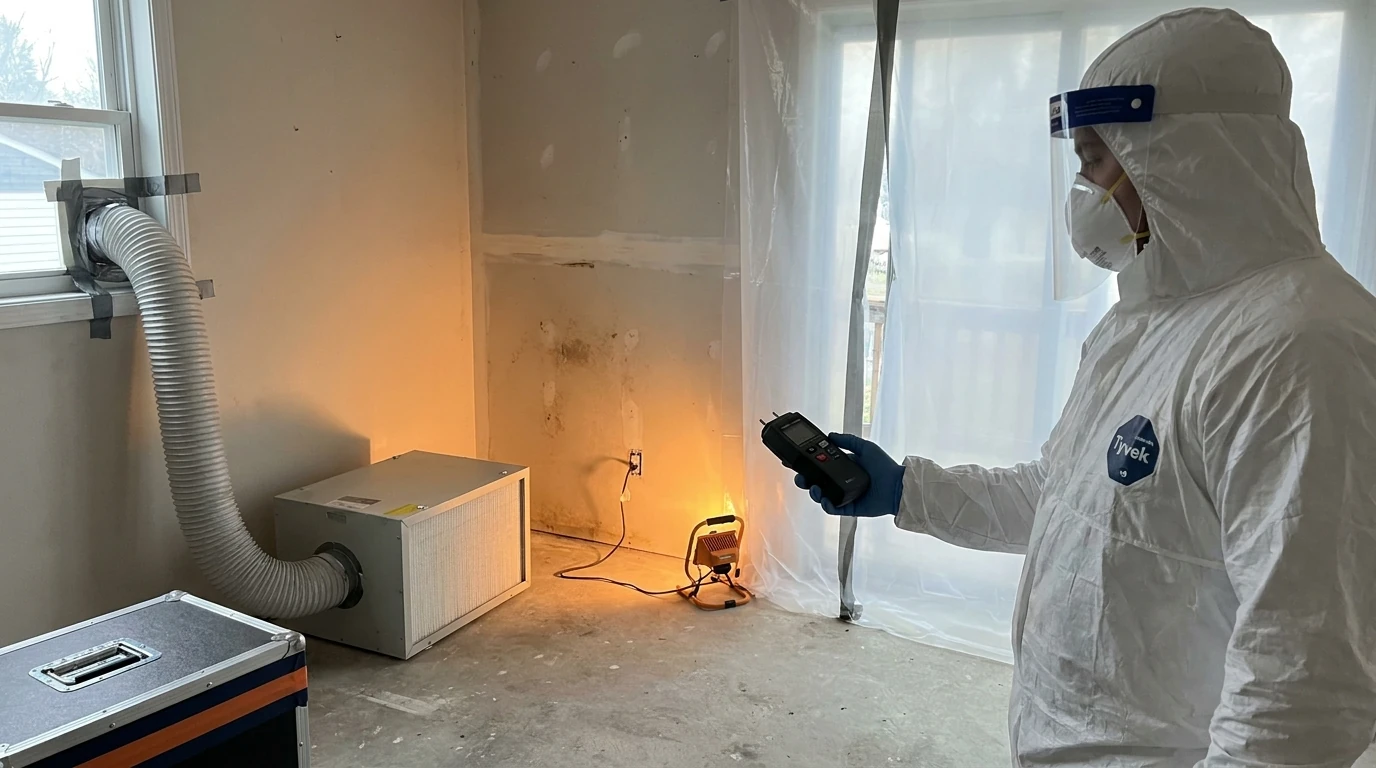
The remediation itself generally follows the ANSI/IICRC S520 standard for professional mold remediation: poly-sheeting containment around the work area, negative air pressure through a HEPA air scrubber so spores don’t spread to the rest of the house, removal of porous material that can’t be cleaned (affected drywall, insulation, sometimes flooring), HEPA vacuuming and cleaning of what remains, and correcting the moisture source itself, whether that’s a plumbing leak, a roof flashing issue, or a condensation line. The EPA’s guidance on mold cleanup covers the same basic sequence for homeowners comparing quotes. Containment doesn’t come down until the space passes a clearance check.
A small patch that looks manageable on the surface can run much larger behind the wall, which is exactly why getting the size right before work starts matters for your wallet and your timeline. Call Air Care Restoration at (325) 339-8723 to describe what you’re seeing, or request an inspection online.