
Odor Removal and Deodorization in Abilene
24/7 odor removal and deodorization in Abilene and surrounding areas. IICRC-certified, insurance billing accepted. Call (325) 339-8723.
Smoke clears from a room in minutes, but the odor it leaves behind can outlast the visible damage by months. The same is true of mold, sewage, and decomposition: once odor molecules bond to porous materials like drywall, insulation, carpet padding, and wood framing, surface cleaning alone will not reach them. That gap between what looks clean and what still smells is exactly where professional deodorization works. Air Care Restoration’s IICRC FSRT-certified technicians use a combination of source removal, thermal fogging, ozone treatment, and hydroxyl deodorization to address odor at the molecular level, not just mask it.
What Odor Removal and Deodorization actually involves
Deodorization is not a product you spray and walk away from. It is a sequence of decisions about which odor compounds are present, how deeply they have penetrated, and which treatment chemistry will neutralize them without damaging the structure or contents.
Smoke odor from a house fire behaves differently depending on what burned. Protein-based fires (cooking, grease) leave a nearly invisible, sticky film that carries an intense smell and bonds aggressively to painted surfaces. Synthetic material fires produce heavy black soot with petrochemical odor compounds that penetrate HVAC systems and settle into wall cavities. Sewage and mold odors are biological: the smell is a byproduct of active microbial activity, and it returns unless the source is physically removed before deodorization begins.
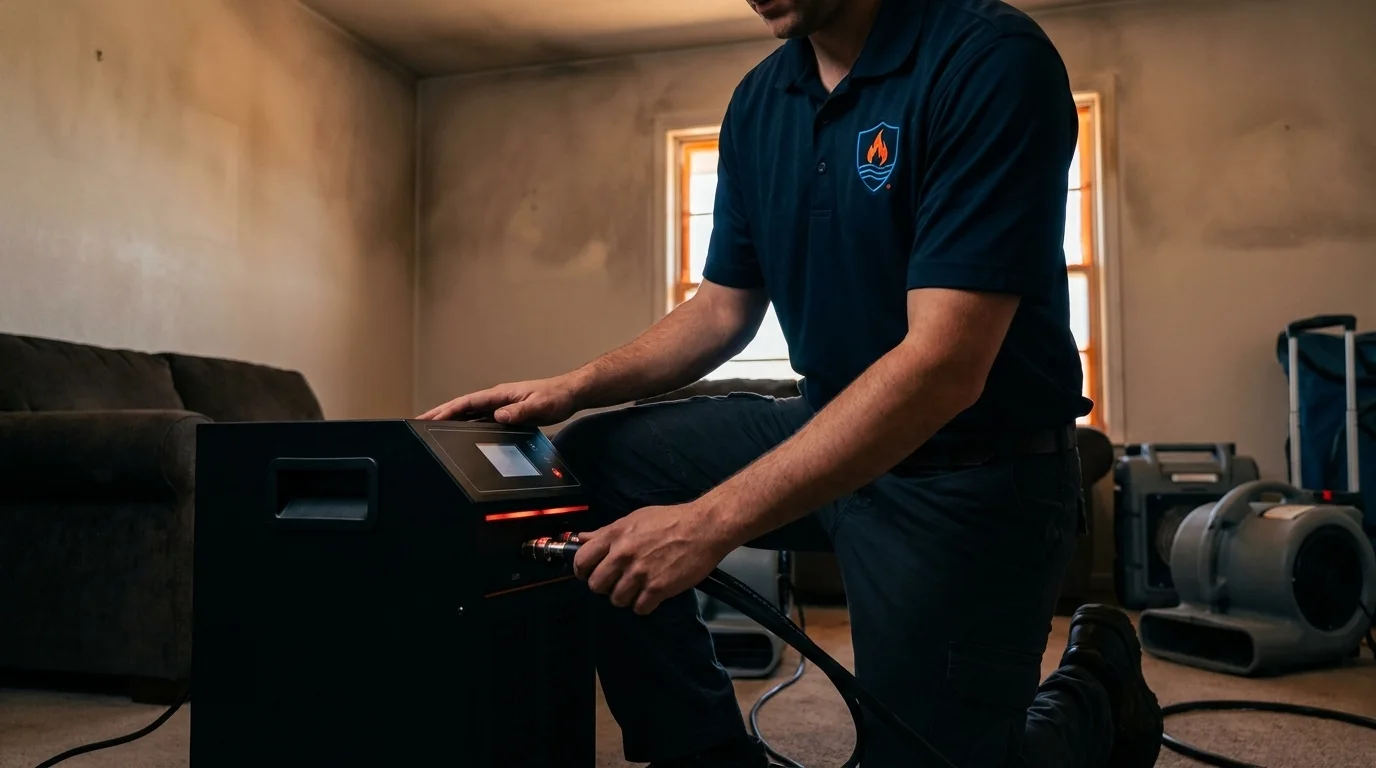
Equipment used in a full professional odor elimination scope typically includes thermal foggers (which atomize deodorizing agents into particles small enough to follow the same pathways smoke took), ozone generators (which oxidize odor molecules in unoccupied spaces), and hydroxyl generators (which use UV light to produce hydroxyl radicals that break down odor compounds and are safe to operate in occupied or partially occupied spaces). Each has a specific application window. Ozone is highly effective but requires the space to be vacated and properly ventilated afterward. Hydroxyl treatment takes longer but can run continuously in spaces where full evacuation is not practical.
Our process
-
Source identification and assessment. Before any treatment begins, technicians locate and characterize the odor source. Treating a space that still contains wet char, saturated insulation, or active mold growth will not produce lasting results. This step includes inspecting HVAC returns, wall cavities where smoke or moisture may have migrated, and contents that may be holding odor.
-
Source removal and structural preparation. Charred materials, contaminated insulation, and saturated porous materials are removed if they cannot be effectively cleaned and deodorized in place. HVAC systems are inspected and, if affected, cleaned before deodorization begins so the system does not redistribute odor compounds after treatment.
-
Thermal fogging or chemical counteractant application. A thermal fogger converts deodorizing solution into a dense, dry fog that penetrates the same porous surfaces and void spaces the odor source reached. This step is matched to the odor type: petroleum-based counteractants for smoke, enzymatic formulations for biological odors.
-
Ozone or hydroxyl treatment. Following fogging, ozone generators or hydroxyl generators run for a calculated dwell time based on room volume and odor severity. Ozone treatment requires the space to be unoccupied; hydroxyl treatment can run in occupied spaces. Dwell time is not guesswork: undertreating leaves residual odor, and overtreating with ozone can damage rubber seals, artwork, and certain fabrics.
-
Verification and clearance. Technicians return after the dwell period to assess results through sensory evaluation and, where applicable, air sampling. If odor persists in specific areas, targeted re-treatment is applied before the job is closed.
What separates a good odor removal response from a bad one
The most common failure in professional odor elimination is skipping source removal and going straight to treatment. Ozone and hydroxyl generators are powerful tools, but they cannot neutralize odor that is still being produced by wet char, saturated subfloor, or active mold. A space that smells acceptable immediately after treatment but returns to baseline within days almost always means the source was not fully addressed.
A second common gap is HVAC neglect. Smoke and odor compounds circulate through duct systems and settle on coil surfaces, duct lining, and filter media. Deodorizing the living space without inspecting and cleaning the HVAC system means the system will re-introduce odor compounds every time it runs.
Insurance adjusters reviewing odor removal claims look for documentation that justifies each treatment phase: photos of the source material, moisture readings, equipment logs showing ozone dwell time or hydroxyl run hours, and a written scope that connects each line item to the loss. Thorough documentation protects the homeowner’s claim and supports the full scope of work.
What does Odor Removal and Deodorization cost?
Typical costs for professional odor elimination vary significantly based on odor type, affected square footage, and how deeply the odor has penetrated structural materials. Most homeowners pay somewhere in the following ranges for common scenarios:
| Scenario | Typical industry range |
|---|---|
| Single room, isolated smoke odor | $400 - $900 |
| Whole-home smoke odor after a contained fire | $2,500 - $6,000 |
| Sewage or biohazard odor, single area | $800 - $2,500 |
| Mold-related odor following remediation | $600 - $1,800 |
| Whole-home ozone or hydroxyl treatment | $1,200 - $3,500 |
| Pet or long-term embedded odor, whole home | $1,500 - $4,000 |
Every loss is different, and Air Care Restoration provides a written scope before any work begins so there are no surprises. Homeowners insurance typically covers odor removal when it is directly tied to a covered peril such as fire, smoke, or a sudden water loss, though coverage for standalone odor complaints without a documented cause varies by policy.
Seasonal and regional considerations
Abilene’s climate creates specific conditions that affect how odor behaves in structures. Hot, dry summers push indoor temperatures high enough that odor compounds off-gas more rapidly from porous materials, making smoke and biological odors more intense in the weeks following a loss. The region’s periodic high winds accelerate wildfire risk in surrounding Taylor County and neighboring counties, and smoke infiltration from exterior fires can affect homes that sustained no direct fire damage. Tight construction common in newer Abilene subdivisions can trap odor compounds with less natural air exchange, extending the time needed for effective treatment.
Service area
Air Care Restoration serves Abilene and the surrounding region, including Sweetwater, Snyder, Coleman, Brownwood, and communities throughout Taylor, Jones, Callahan, and Brown counties. The city-specific pages for each area link back to this page for the full technical detail on our deodorization process.
If your home or property still carries the smell of smoke, sewage, mold, or any other persistent odor, call Air Care Restoration at (325) 339-8723 any time, day or night. Tell us what you are smelling and when it started, and we will schedule an odor source assessment to determine exactly what treatment your property needs.
Frequently Asked Questions
Does homeowners insurance cover odor removal and deodorization?
What is the difference between ozone treatment and hydroxyl deodorization, and which one do I need?
Why does smoke odor come back a few days after a cleaning company said the job was done?
How long does thermal fogging take, and do I need to leave my home during the process?
Can odor removal be done without replacing drywall, flooring, or insulation?
Looking for the best odor removal and deodorization company in Abilene?
Air Care Restoration provides licensed and insured odor removal and deodorization in Abilene, TX and the surrounding area, and has served local property owners since 2026. Customers rate us 5.0 out of 5 stars across 22 Google reviews. We answer calls 24/7 — call (325) 339-8723 for immediate help.
Need Odor Removal and Deodorization now?
We respond 24/7 across Abilene and surrounding TX cities.
Related Coverage
- Our Restoration Services
- Contact Air Care Restoration
- Odor Removal and Deodorization in Albany
- Odor Removal and Deodorization in Anson
- Odor Removal and Deodorization in Baird
- Odor Removal and Deodorization in Ballinger
- Odor Removal and Deodorization in Bronte
- Odor Removal and Deodorization in Brownwood
- Odor Removal and Deodorization in Buffalo Gap
- Odor Removal and Deodorization in Clyde
- Odor Removal and Deodorization in Coleman
- Odor Removal and Deodorization in Colorado City
- Odor Removal and Deodorization in Comanche
- Odor Removal and Deodorization in Early