
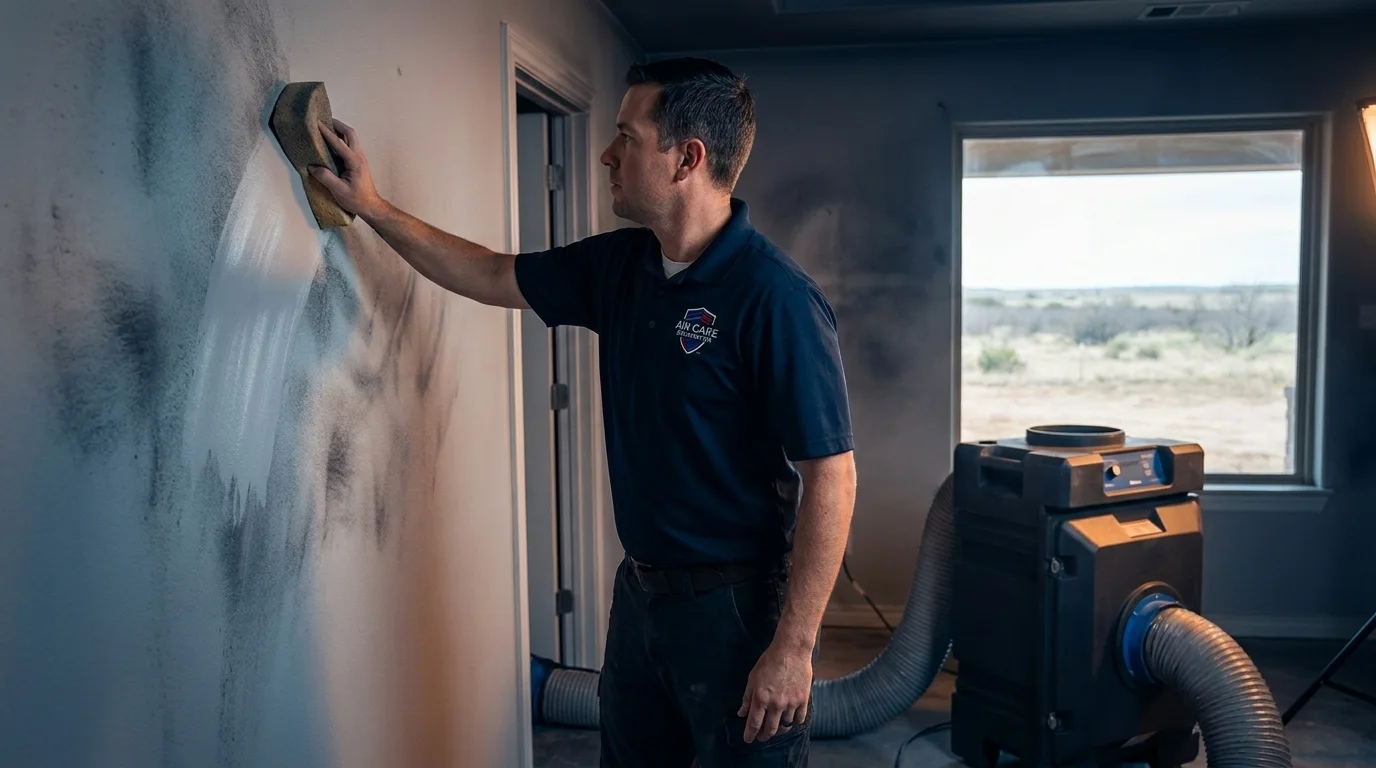
24/7 Emergency Smoke Damage Restoration in Abilene
24/7 emergency smoke damage restoration in Abilene and surrounding areas. IICRC-certified, insurance billing accepted. Call (325) 339-8723.
Smoke damage emergency in your home or business? Call (325) 339-8723 now. We answer 24/7 and can begin smoke residue assessment as soon as the fire department clears the structure for re-entry.
Smoke behaves differently than the fire itself. Even after flames are out, soot particles continue to etch into painted drywall, pit metal fixtures, and work their way into HVAC ductwork, carpet padding, and wall cavities for days afterward. A kitchen fire that stayed contained to one room can still leave an acidic film on surfaces three rooms away, carried there by the pressure of the fire and the air handler trying to clear the smell. The longer that residue sits, the more it bonds to porous materials and the harder smoke damage repair becomes.
What smoke damage restoration actually involves
Smoke damage restoration is the work of identifying what type of soot you’re dealing with, removing it from every surface it touched, and neutralizing the odor at a molecular level rather than masking it. That means cleaning walls, ceilings, cabinetry, and flooring, but it also means pulling outlet covers to check wall cavities, removing HVAC filters and sometimes ductwork sections, and evaluating whether contents like upholstery, electronics, or clothing can be cleaned or need replacement. Dry smoke from a fast-burning wood fire leaves a powdery residue that wipes away relatively easily. Wet smoke from a smoldering fire or burning synthetics leaves a sticky, smeary residue that requires solvent-based cleaning and penetrates deeper into porous materials. Getting that distinction right at the start determines which chemicals and techniques actually work.
Our process
- Soot characterization. We identify whether the residue is protein-based (common after kitchen fires involving meat or grease), wet smoke, dry smoke, or fuel-oil soot, since each requires a different cleaning agent and approach.
- Pre-cleaning and source removal. Heavily charred or saturated materials that can’t be restored are removed first so they stop contributing odor and residue to the rest of the structure.
- Surface cleaning. Walls, ceilings, trim, cabinetry, and hard flooring are cleaned with the agents matched to the soot type identified in step one, working from the least invasive method up.
- Thermal fogging and ozone or hydroxyl treatment. Odor-causing particles that have bonded to materials at a microscopic level are neutralized using thermal fogging equipment and, where appropriate, ozone or hydroxyl generators run in a sealed, unoccupied space.
- Contents evaluation and HVAC check. Furniture, textiles, and personal items are assessed for cleaning versus disposal, and the HVAC system is inspected since ductwork is one of the most common places post-fire smoke cleanup gets skipped.
What separates a good smoke damage response from a bad one
The most common mistake is treating smoke odor as a surface problem and reaching for air fresheners or ozone alone without doing the underlying cleaning. Odor is a symptom of residue still sitting on or in materials; masking it doesn’t resolve the chemical bond between soot and the surface, and the smell returns, often worse, once humidity rises. A second mistake is skipping HVAC inspection. If the system ran during or shortly after the fire, soot gets pulled through the ductwork and redistributed every time the system cycles, which means a home can smell like smoke in rooms that never saw flame.
Insurance adjusters reviewing a smoke damage claim typically look for documented soot testing (to confirm the cleaning method matched the residue type), itemized contents inventories with pre-loss condition noted, and evidence that odor-causing residue was actually removed rather than just covered. Photo documentation before and after each cleaning pass, along with moisture and air quality checks where ozone treatment was used, supports a stronger claim and reduces disputes over whether a room needed full repainting versus cleaning alone.
What does smoke damage restoration cost?
Costs vary widely depending on how far the smoke traveled, how porous the affected materials are, and whether HVAC or contents cleaning is needed in addition to structural cleaning. Every loss is different, which is why Air Care Restoration provides a written scope of work before any cleaning begins. Most homeowners insurance policies cover smoke damage restoration services when the smoke originated from a covered fire event, though coverage for smoke damage without an accompanying fire (such as from a neighboring wildfire) depends on the specific policy.
| Scenario | Typical range |
|---|---|
| Single room, light dry smoke | $500 - $1,500 |
| Multiple rooms, wet smoke residue | $2,500 - $6,000 |
| Whole-house smoke odor with HVAC contamination | $6,000 - $15,000 |
| Contents cleaning (furniture, textiles, electronics) | $1,000 - $5,000 |
| Wildfire smoke infiltration, no structure fire | $1,500 - $4,000 |
Seasonal & regional considerations
West Texas summers bring extended dry spells and grass and wildfire activity across the Big Country, and wind-driven smoke from a nearby fire can infiltrate a home through attic vents and HVAC intakes even when the structure itself was never touched by flame. Wildfire smoke cleanup in these cases often focuses heavily on ductwork, attic insulation, and soft surfaces that trap airborne particulate, since there’s no char or structural damage to guide where the residue settled.
Service area
We provide smoke damage restoration to Abilene and the surrounding Big Country communities, responding to both structure fires and the secondary smoke infiltration that follows regional wildfire activity.
If smoke odor is settling into your walls, furniture, or ductwork, every day it sits makes smoke residue cleanup more involved. Call (325) 339-8723 to begin smoke and soot removal with a documented scope your insurance carrier can review.
Services We Handle
- Smoke Damage Cleanup
- Soot Removal
Frequently Asked Questions
Does homeowners insurance cover smoke damage restoration?
What's the difference between wet smoke and dry smoke, and why does it matter?
Can smoke odor return after cleaning if it isn't fully treated?
Do you need to clean the HVAC system after a fire, even if the fire didn't reach it?
Can furniture and clothing be cleaned instead of replaced after smoke damage?
Looking for the best smoke damage restoration company in Abilene?
Air Care Restoration provides licensed and insured smoke damage restoration in Abilene, TX and the surrounding area, and has served local property owners since 2026. Customers rate us 5.0 out of 5 stars across 22 Google reviews. We answer calls 24/7 — call (325) 339-8723 for immediate help.
Need Smoke Damage Restoration now?
We respond 24/7 across Abilene and surrounding TX cities.
Related Coverage
- Our Restoration Services
- Contact Air Care Restoration
- Restoration Services in Albany
- 24/7 Emergency Smoke Damage Restoration in Anson
- Restoration Services in Baird
- Restoration Services in Ballinger
- Restoration Services in Bronte
- 24/7 Emergency Smoke Damage Restoration in Brownwood
- 24/7 Emergency Smoke Damage Restoration in Buffalo Gap
- 24/7 Emergency Smoke Damage Restoration in Clyde
- Restoration Services in Coleman
- Restoration Services in Colorado City
- Restoration Services in Comanche
- Restoration Services in Early
- The Fire Damage Restoration Process, Explained