
Water Leak Detection in Abilene
24/7 water leak detection in Abilene and surrounding areas. IICRC-certified, insurance billing accepted. Call (325) 339-8723.
What water leak detection actually involves
A hidden water leak rarely announces itself. You might notice a warm spot on the slab, a spike on the water bill, a faint hum behind drywall, or a musty smell that wasn’t there last month. By the time any of those signs show up, the leak has usually been running for days or weeks, soaking into subfloor, insulation, or the soil beneath a slab. Water leak detection is the diagnostic step that finds the source before demolition starts, so repairs target the actual problem instead of guessing and opening up walls or flooring that don’t need it.
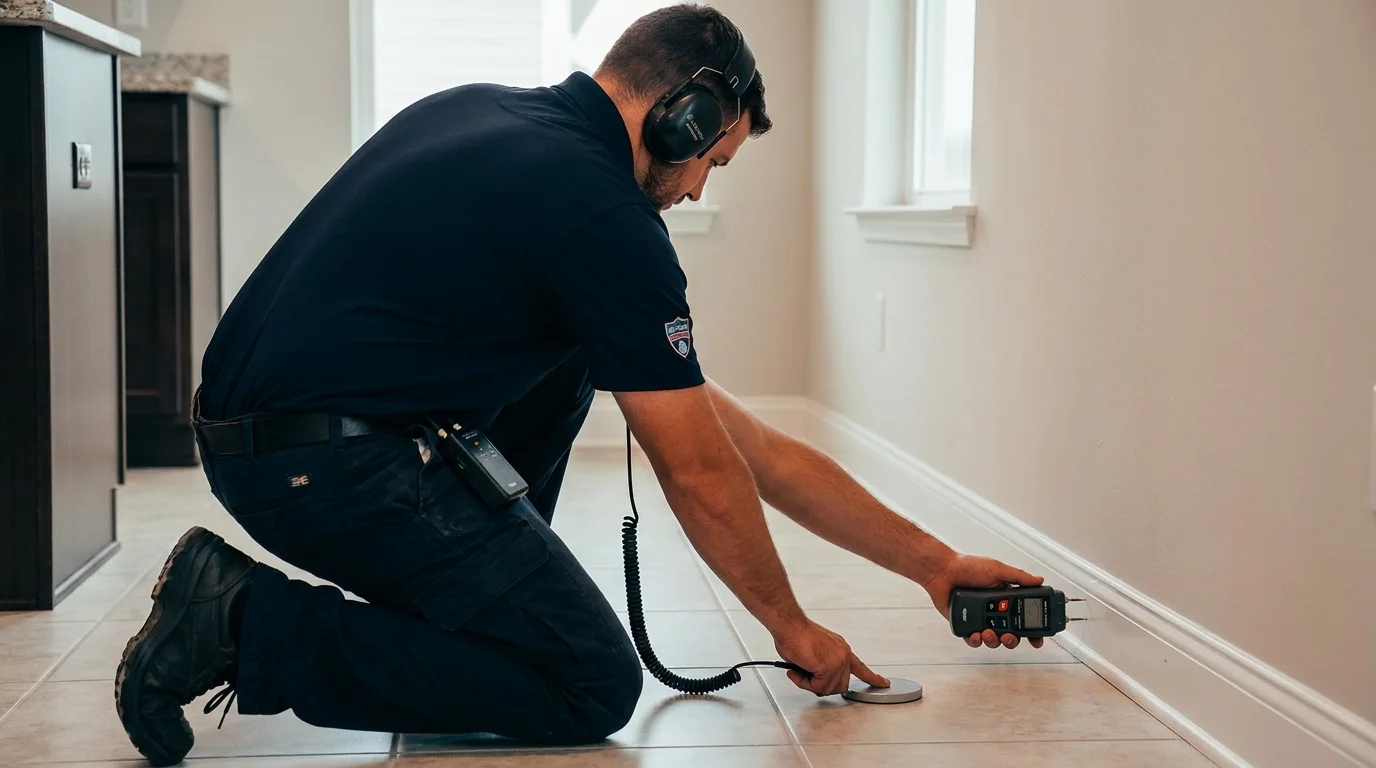
The work is done with non-invasive equipment: acoustic listening devices that pick up the sound of pressurized water moving through pipe under concrete or flooring, thermal imaging cameras that read temperature differentials in walls and slabs, moisture meters that map how far water has traveled through drywall and framing, and in some cases tracer gas or video pipe inspection for interior drain lines. Most residential leak detection visits take one to two hours on-site, depending on the size of the home and how far the water has migrated.
Our process
- Intake and symptom review. We start with what you’ve already noticed: water bill changes, damp spots, sounds, or a specific room where flooring feels off. This narrows the search area before any equipment comes out.
- Non-invasive scanning. Acoustic and thermal equipment is used to trace the leak’s path through slab, wall cavity, or plumbing line without cutting into finished surfaces.
- Moisture mapping. Meters document how far moisture has spread into drywall, baseboards, subfloor, or insulation, which matters for both repair scope and insurance documentation.
- Point-of-leak confirmation. Once the source is narrowed to a specific location, that spot is marked and documented with photos before any access is opened.
- Written findings. You get a clear report of what was found, where, and what it will take to reach it, whether that’s a plumber for the repair or our crew for the resulting water damage.
What separates a good leak detection response from a bad one
The most common mistake is skipping the diagnostic step entirely and cutting open drywall or breaking slab based on a guess. That leads to repeat holes, repeat patching, and sometimes the wrong pipe run gets exposed while the actual leak keeps running underneath. A slab leak in particular can shift location as water tracks along the path of least resistance under the foundation, so a single moisture reading at one spot isn’t enough; the acoustic signature has to be followed to where the pressure loss is actually occurring.
Insurance adjusters look for documentation that ties the water damage back to a specific, datable event, not gradual seepage, which most policies exclude. That means photos of the moisture readings, a record of when the leak was first detected, and a clear line between the plumbing failure and the resulting damage. Skipping that paperwork is one of the fastest ways a claim gets pushed back or denied outright.
What does water leak detection cost?
Cost depends on how deep the leak is, whether it’s under a slab, inside a wall cavity, or part of a longer plumbing run, and how much surface area needs to be scanned. These are typical industry ranges, not a quote: every property is different, and Air Care Restoration provides a written scope before any work begins.
| Scenario | Typical range |
|---|---|
| Single fixture or exposed pipe, acoustic check | $150 - $350 |
| Wall cavity moisture mapping, one room | $250 - $500 |
| Slab leak detection, single-story home | $400 - $900 |
| Whole-house leak survey | $600 - $1,200 |
| Multi-unit or commercial building scan | $1,000 - $2,500+ |
Homeowners insurance often covers the resulting water damage cleanup when the leak is sudden and accidental, but many policies treat the leak detection and pipe repair itself as a maintenance cost the homeowner pays out of pocket. We can help document the damage timeline either way.
Seasonal & regional considerations
Abilene sits on expansive clay soil that shrinks and swells with moisture changes, which puts steady stress on slab foundations and the plumbing lines running through them. That movement is a common contributor to slab leaks in both older pier-and-beam homes with updated plumbing and newer slab-on-grade construction around the city. Summer heat and drought cycles dry and contract the clay, then heavy rain swells it back, and that repeated shift is often when a pinhole leak in a copper line finally lets go. Winter cold snaps bring their own risk when exposed or poorly insulated pipe runs freeze and crack, so a leak that shows up in January may have started as a hairline fracture months earlier.
Service area
We run leak detection calls throughout Abilene and the surrounding Big Country communities, including Abilene proper and nearby towns across Taylor County. Housing stock varies from older pier-and-beam homes near downtown to newer slab construction on the city’s edges, and the detection approach changes accordingly.
If you’ve got a water bill that doesn’t add up, a warm spot on the floor, or a sound behind a wall you can’t explain, schedule a water leak detection visit before it turns into a bigger repair. Call (325) 339-8723 to get a technician out to trace it down.
Frequently Asked Questions
Does homeowners insurance cover water leak detection?
How do you find a slab leak without breaking up the floor?
What are the signs of a water leak inside a wall?
How long does a leak detection visit take?
Can you tell how long a leak has been active?
Looking for the best water leak detection company in Abilene?
Air Care Restoration provides licensed and insured water leak detection in Abilene, TX and the surrounding area, and has served local property owners since 2026. Customers rate us 5.0 out of 5 stars across 22 Google reviews. We answer calls 24/7 — call (325) 339-8723 for immediate help.
Need Water Leak Detection now?
We respond 24/7 across Abilene and surrounding TX cities.
Related Coverage
- Our Restoration Services
- Contact Air Care Restoration
- Restoration Services in Albany
- Restoration Services in Anson
- Restoration Services in Baird
- Restoration Services in Ballinger
- Restoration Services in Bronte
- Restoration Services in Brownwood
- Restoration Services in Buffalo Gap
- Restoration Services in Clyde
- Restoration Services in Coleman
- Restoration Services in Colorado City
- Restoration Services in Comanche
- Restoration Services in Early