
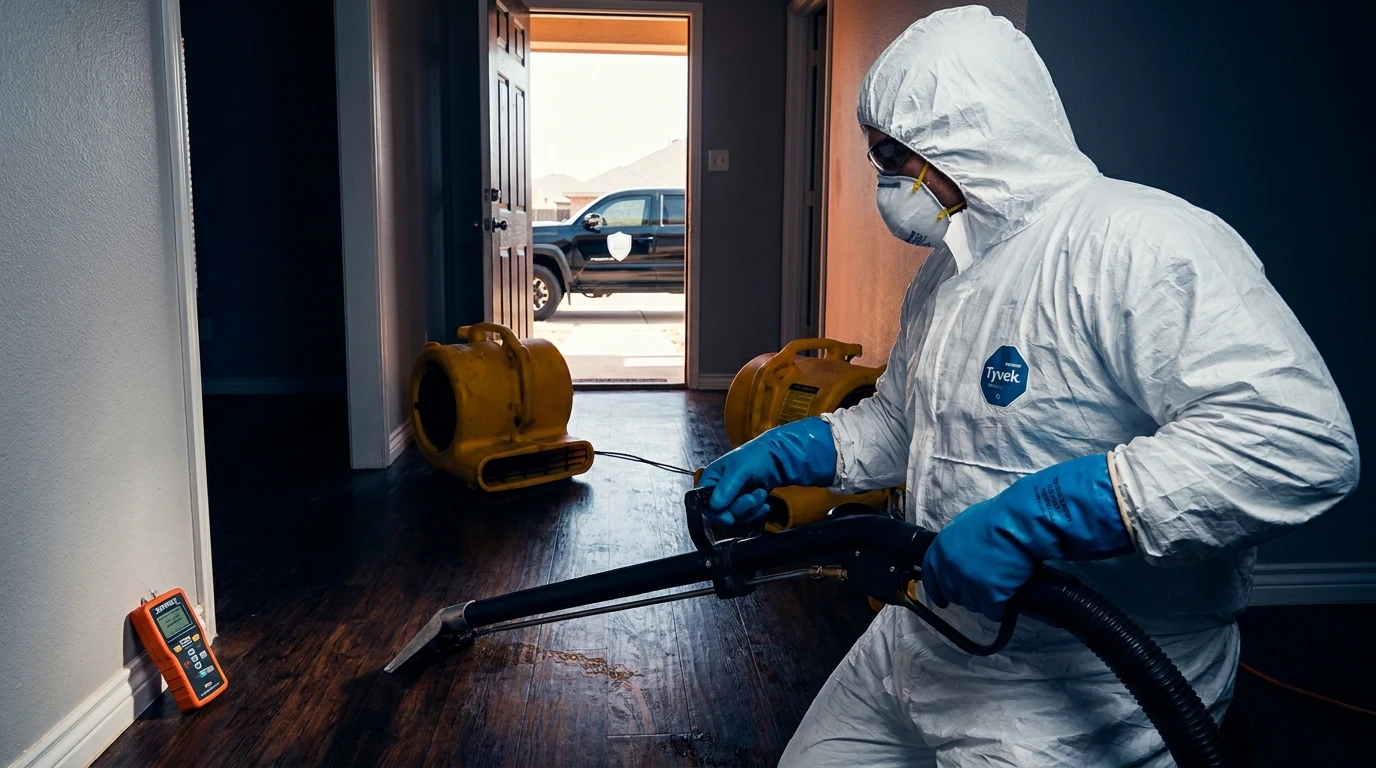
TL;DR: A toilet overflow that spreads sewage into a bathroom, hallway, or bedroom is Category 3 water, the most contaminated class of water loss under the IICRC S500 standard. It requires fast extraction, removal of contaminated porous materials, antimicrobial treatment, and documented drying, not a mop and a fan. For a first-time insurance claim, the documentation matters as much as the drying.
If your toilet has ever backed up on a weekend night and sewage spread faster than you could contain it, you already know the panic. That’s exactly what happened to one homeowner, Adam, when an overflow sent contaminated water into his bathroom, hallway, and a bedroom on a Friday evening. He’d never filed a homeowners insurance claim before and had no idea what to expect. His review, posted after the job wrapped, is a good window into what an emergency water damage call is actually supposed to look like.
Sarha with Air Care Restoration is a life savor. Our toilet overflowed causing sewage to flood our bathroom, hallway, and one of the bedrooms. … showed up in less than 45 minutes on a Friday night. This was our first time experiencing water damage, and we’ve never had to file an insurance claim. They walked us through the entire process from start to finish. Keeping us informed and updated through the entire process. Sarha and the crew were extremely knowledgeable, informative, and well presented. They truly treated our home like it was their own, and us like family. If you are ever in need of water damage services do not hesitate to call.
, Adam, verified Google review
What Does “Category 3 Water” Mean, and Why Can’t You Clean It Yourself?
Category 3 water, also called black water, is water contaminated with sewage, waste, or other biological hazards, and a toilet overflow is Category 3 the moment it leaves the bowl. Under the IICRC S500 standard, that classification changes everything about the cleanup: porous materials the water touched, baseboards, carpet pad, sometimes drywall, generally can’t be sanitized and have to come out, not just dry out.
That’s different from Category 1 water (a clean supply-line break) or Category 2 (gray water from a washing machine or dishwasher). Mopping up black water with household cleaners doesn’t neutralize the pathogens in it; it just spreads them. If you’ve dealt with contamination beyond a single room, our breakdown of Category 3 water damage covers what has to be removed and why.
Why Does Response Time Matter So Much on a Sewage Call?
A fast arrival limits how much material has to be torn out, because sewage-contaminated water starts breaking down drywall and subfloor within hours, and bacteria multiply quickly in warm, damp conditions. The 24 to 48 hour window after a loss is when the damage either stays contained or spreads into the wall cavities and under the flooring.
A Friday night call is the hardest kind to get right, since most contractors aren’t answering the phone. Getting a crew on-site within the hour means extraction starts before the water has fully wicked into baseboards and framing, which usually means less demolition and a shorter overall timeline. It also means moisture readings get taken early, which matters later when documenting the full extent of the loss.
What Does “Walked Us Through the Entire Process” Actually Look Like?
For someone filing their first water damage claim, it means the documentation happens before anything gets torn out, and the homeowner sees the same scope the adjuster sees. That’s photos and moisture meter readings of every affected surface, a written scope of what has to be removed versus what can be dried in place, and plain-language explanations of what the policy typically covers.
Most homeowners policies cover sudden, accidental losses like a toilet overflow, but the exclusions and the deductible math aren’t always obvious to someone going through it for the first time. If you want the fuller picture before you’re mid-claim, our plain-English guide to what homeowners insurance covers walks through what’s typically included and what gets denied.
What Actually Happens During a Sewage Cleanup?
The work follows a set sequence regardless of whose bathroom it is:
- Safety and source control. Shut off the water source and assess which areas were contaminated.
- Extraction. Standing water and saturated material get pumped and extracted first.
- Removal of contaminated porous materials. Baseboards, carpet pad, and anything that can’t be sanitized comes out.
- Antimicrobial application. Affected surfaces get treated to address the biological contamination, not just the moisture.
- Drying and monitoring. Air movers and dehumidifiers run until moisture meter readings confirm the structure is dry, typically logged daily.
- Reconstruction. Drywall, flooring, and trim get rebuilt once the space is confirmed dry.
Skipping steps 3 or 4 is how sewage losses turn into mold problems a few months later.
If a toilet overflow or any sewage backup has hit your bathroom, hallway, or bedrooms, don’t wait on it. Call (325) 339-8723 to get a technician out and a written scope started before the water sits any longer.
About Air Care Restoration
The company is an IICRC Certified Firm and OSHA-trained team serving Abilene and the surrounding Big Country region, including Sweetwater, Clyde, Merkel, and Anson, since 2026. It holds a Texas Mold Remediation Contractor License (MRC2262) through the Texas Department of Licensing and Regulation. Crews handle water damage restoration, sewage cleanup, storm damage restoration, mold remediation, fire damage restoration, biohazard cleanup, contents restoration, and general contracting across the region, operating on a 24/7 basis.