
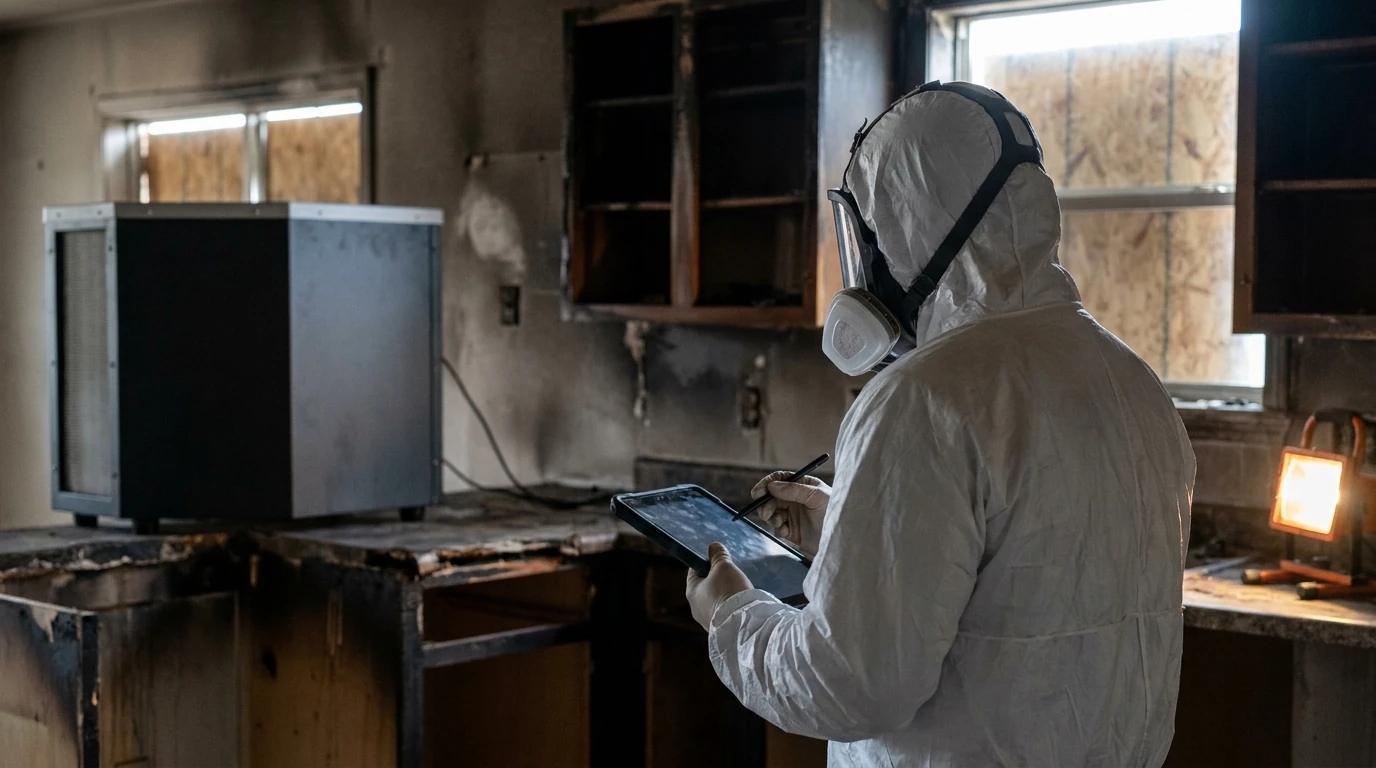
TL;DR: Fire damage restoration in Abilene, TX typically costs between $2,000 and $50,000 or more, depending on how much square footage burned, how deep the soot penetrated, and whether firefighting water soaked the structure. Minor smoke and soot cleanup in a single room often runs $2,000 to $5,000. A kitchen fire with structural char and water damage can reach $15,000 to $35,000. Most homeowners insurance policies cover these costs after the deductible, provided the loss was sudden and accidental.
If a grease fire scorched your kitchen last night, or smoke from a Big Country wildfire pushed into your Abilene home through open vents, you need a real number before you sign anything with your adjuster. Fire damage restoration costs in West Texas span a wide range because fire damage is never just the burned area. Smoke travels through HVAC ducts, water from firefighting soaks subfloors and drywall, and soot residue can be acidic enough to corrode metal and appliance finishes within a few days. Here is what actually drives the price, and what a legitimate estimate should include.
How Much Does Fire Damage Restoration Cost in Abilene, TX?
In Abilene and the surrounding Big Country region, fire damage restoration typically costs $2,000 to $50,000 or more, with most residential jobs landing between $8,000 and $25,000. The exact number depends on square footage affected, smoke type, how much water the fire department used, and whether structural rebuild is needed.
| Scope of Work | Typical Cost Range |
|---|---|
| Single-room smoke and soot cleanup (no structural damage) | $2,000 - $5,000 |
| Whole-house odor and residue treatment | $3,500 - $9,000 |
| Moderate fire with charred drywall, framing exposed | $10,000 - $25,000 |
| Fire plus firefighting water damage (combined mitigation) | $12,000 - $35,000 |
| Contents pack-out, cleaning, and climate-controlled storage | $1,500 - $6,000 |
| Major structural fire requiring reconstruction | $40,000 - $100,000+ |
These are typical industry ranges, not a quote for your property. Every fire is different, and Air Care Restoration provides a written scope of work before any job begins, broken out by phase so you know exactly what you’re paying for.
What Factors Drive the Cost of Fire Damage Restoration?
Six variables move the price more than anything else: square footage affected, the smoke’s class, how much water was used to extinguish the fire, contents volume, odor severity, and whether rebuild triggers code upgrades.
Square footage and smoke reach. Smoke travels through ductwork and wall cavities far beyond the room that burned, which is why a small kitchen fire can still require whole-house odor treatment.
Smoke type. The IICRC S700 fire restoration standard classifies smoke residue by how it behaves. Dry smoke from paper and wood burns leaves a powdery residue that wipes away fairly easily. Wet smoke from smoldering plastics and synthetics leaves a sticky, smeared film that penetrates porous materials like drywall and insulation. Protein residue from a stovetop fire is nearly invisible but carries a strong odor and can etch painted surfaces and metal within hours.
Firefighting water. Most fires involve hundreds or thousands of gallons of suppression water, which soaks subfloors, drywall, and insulation the same way a burst pipe does. That water damage is usually mitigated alongside the fire cleanup, and our companion guide on water damage restoration cost in TX breaks down what that side of the job typically runs.
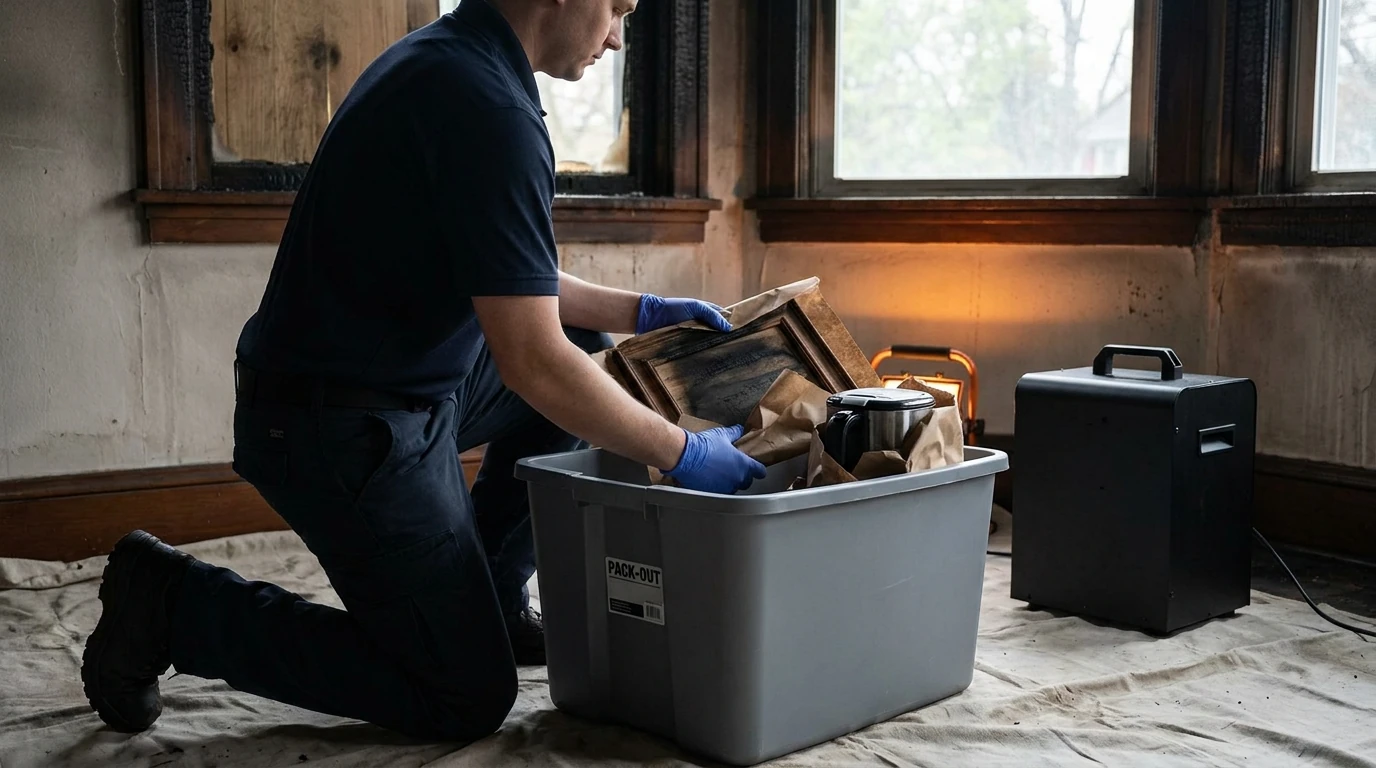
Contents volume and odor severity. Furniture, electronics, and textiles that can be cleaned and deodorized get packed out, cleaned, and stored; items that are too far gone are documented as a total loss for the claim. The more odor-saturated the home, the more treatment cycles (ozone, hydroxyl generators, thermal fogging) it takes to clear it, which is why odor removal is usually its own line item.
Code upgrades. Once permits are pulled for structural rebuild, local building code may require updated electrical, smoke detectors, or egress changes that weren’t part of the original fire damage but add to the final invoice.
Will Homeowners Insurance Cover Fire Damage Restoration Costs?
Most homeowners and commercial property policies treat fire as a covered peril, including smoke and soot remediation, once you’ve met your deductible. Coverage typically pays for mitigation, cleaning, and either actual cash value (ACV) or replacement cost value (RCV) rebuild, depending on your policy’s terms.
The gap most homeowners miss is documentation. Insurers want dated photos, moisture logs, a room-by-room inventory of damaged contents, and a scope of work tied to actual line items, not a lump-sum number. The Texas Department of Insurance publishes guidance for West Texas homeowners filing fire and wildfire-related claims, including what to ask your adjuster about ACV versus RCV payouts. A restoration company that photographs and logs the loss as work happens, rather than after the fact, makes the claim easier to defend.
What Happens During a Fire Damage Restoration Estimate?
A real fire damage estimate starts with a structural safety check, then moves through documentation before a single number gets written down.
- Safety and structural assessment. Confirming the home is safe to enter, checking for compromised framing or electrical hazards before anyone starts cleanup.
- Scope documentation. Photographing every affected room, testing smoke type, and mapping moisture from firefighting water with a meter.
- Written, phased estimate. Mitigation, contents, odor treatment, and rebuild priced as separate line items, not one bundled figure.
- Insurance coordination. Matching the scope to the adjuster’s inspection so the claim and the work line up.
- Mitigation, then reconstruction. Cleaning and drying happen first; framing, drywall, and finish work follow once the structure is dry and deodorized.
For the full walkthrough of what each phase actually involves, see our fire damage restoration process guide.
What Should You Watch for in a Fire Damage Restoration Estimate?
A vague, one-line estimate is the biggest red flag in fire restoration pricing. A legitimate scope separates mitigation, contents, odor, and rebuild so you can see exactly what you’re paying for and compare it against the insurance adjuster’s line items.
Watch for estimates that skip odor treatment entirely (it almost never goes away on its own), that don’t document moisture readings from firefighting water, or that quote rebuild work without a permit plan. If structural rebuild is part of the job, ask whether it’s handled in-house or subcontracted; a company that offers general contracting under one roof usually means fewer handoffs and a tighter timeline between mitigation and finish work.
If you’re staring at a fire-damaged room in Abilene, Clyde, or anywhere across the Big Country, the next practical step is a documented scope, not a guess. Request a fire damage estimate and get a written breakdown before you commit to any insurance paperwork.
About Air Care Restoration
Air Care Restoration is an IICRC Certified Firm serving Abilene, TX and the surrounding Big Country region, with technicians holding IICRC FSRT (Fire & Smoke Restoration) and WRT (Water Restoration) credentials. The company is licensed and insured, with Texas Mold Remediation Contractor License MRC2262 on file with the Texas Department of Licensing and Regulation. Air Care Restoration operates on a 24/7 basis and handles fire damage restoration, odor removal, and general contracting rebuild work across the service area.
Need help now? Call Air Care Restoration at (325) 339-8723.